
ME


Case study
Qué mierda cocino
AI-powered cooking assistant.
A bold, conversational recipe generator that turns whatever ingredients are available into three practical options.


Overview
About the project
Qué mierda cocino is a web application designed to solve one of the most common everyday problems: having ingredients at home but no idea what to prepare.
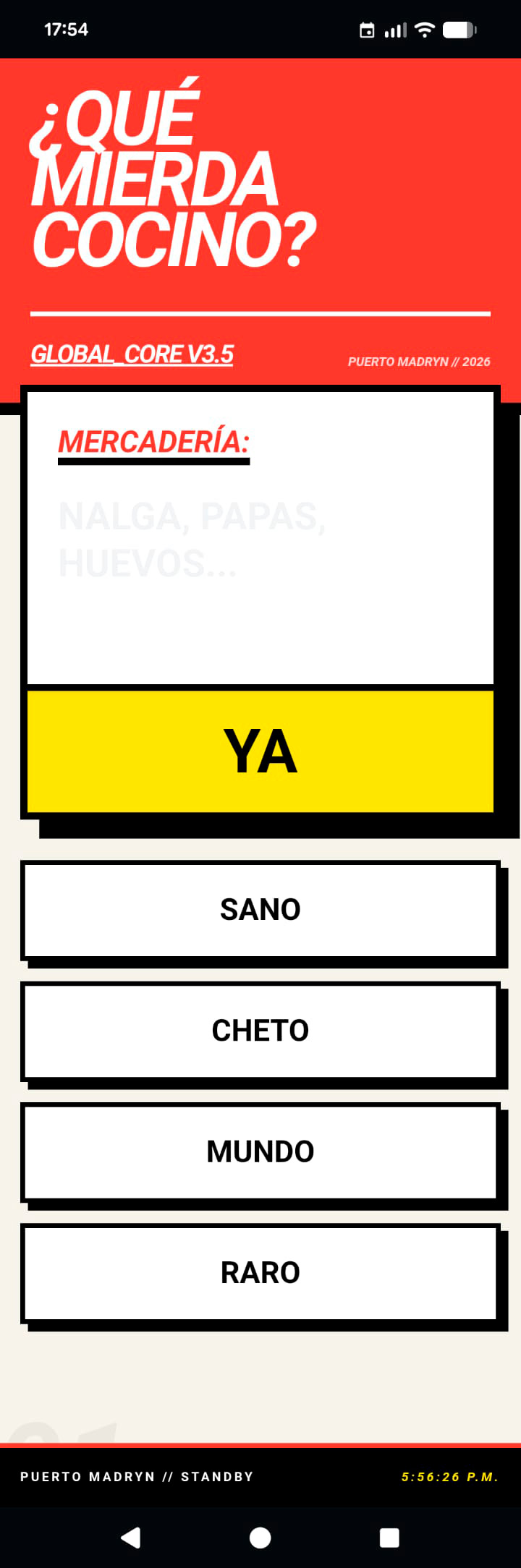
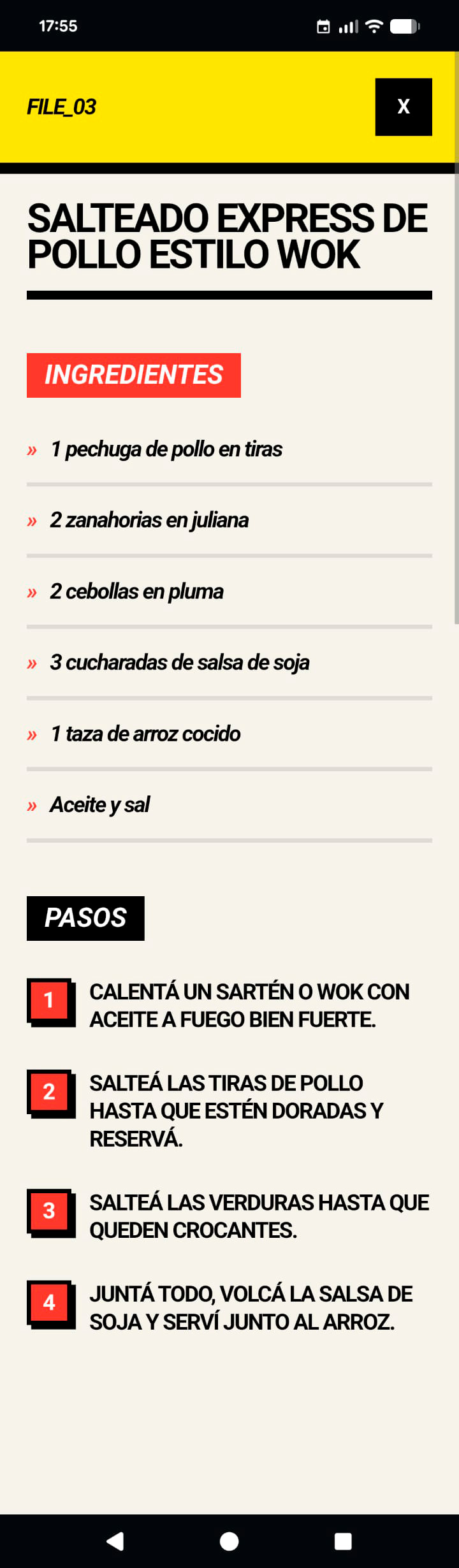
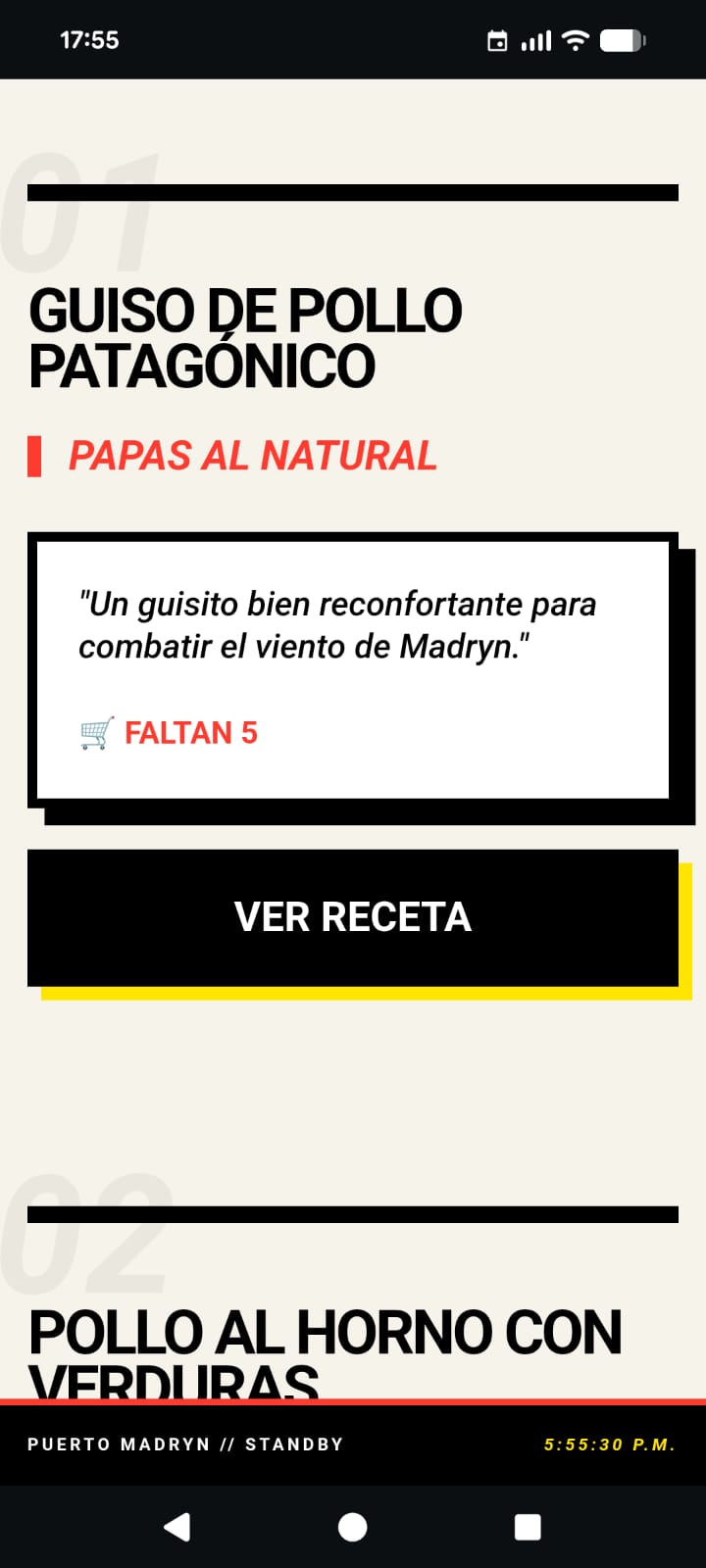
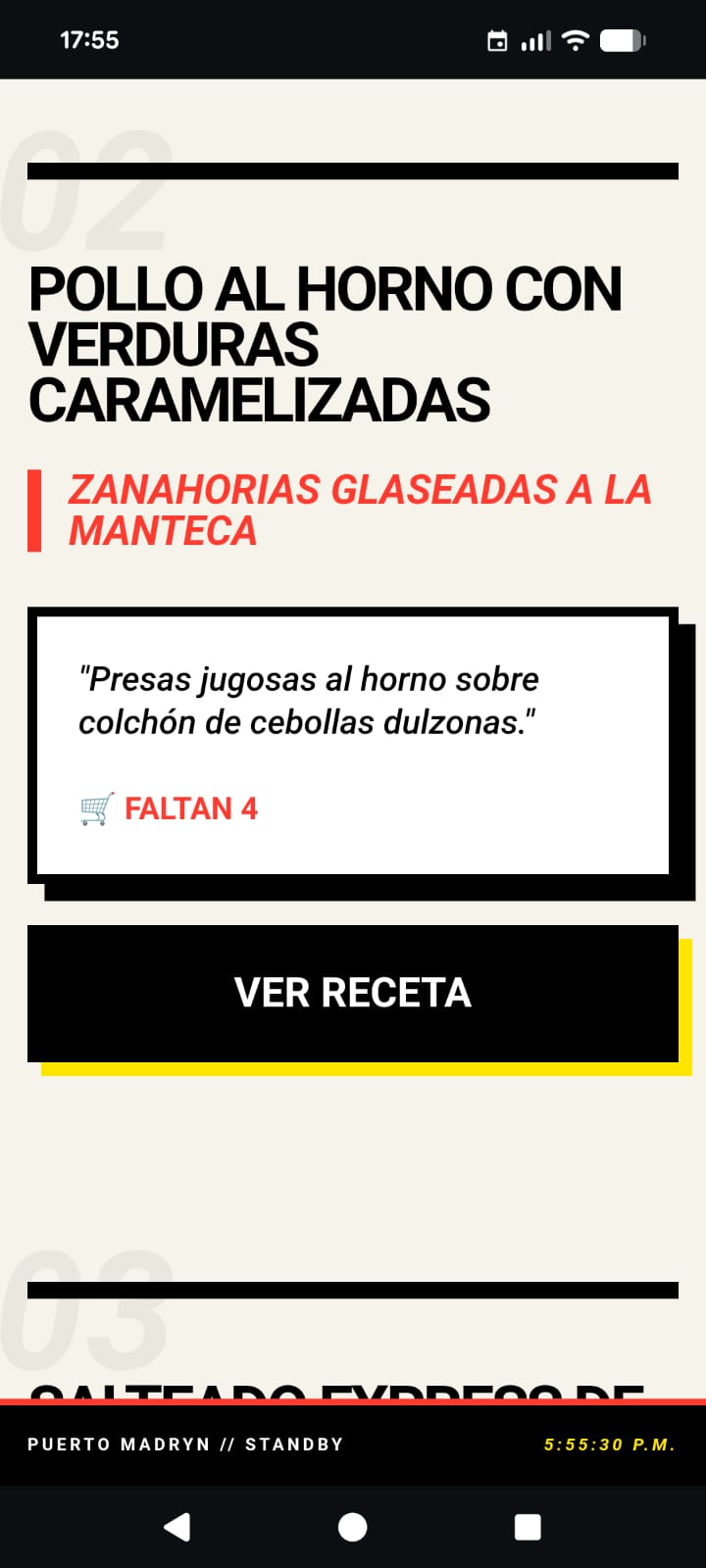
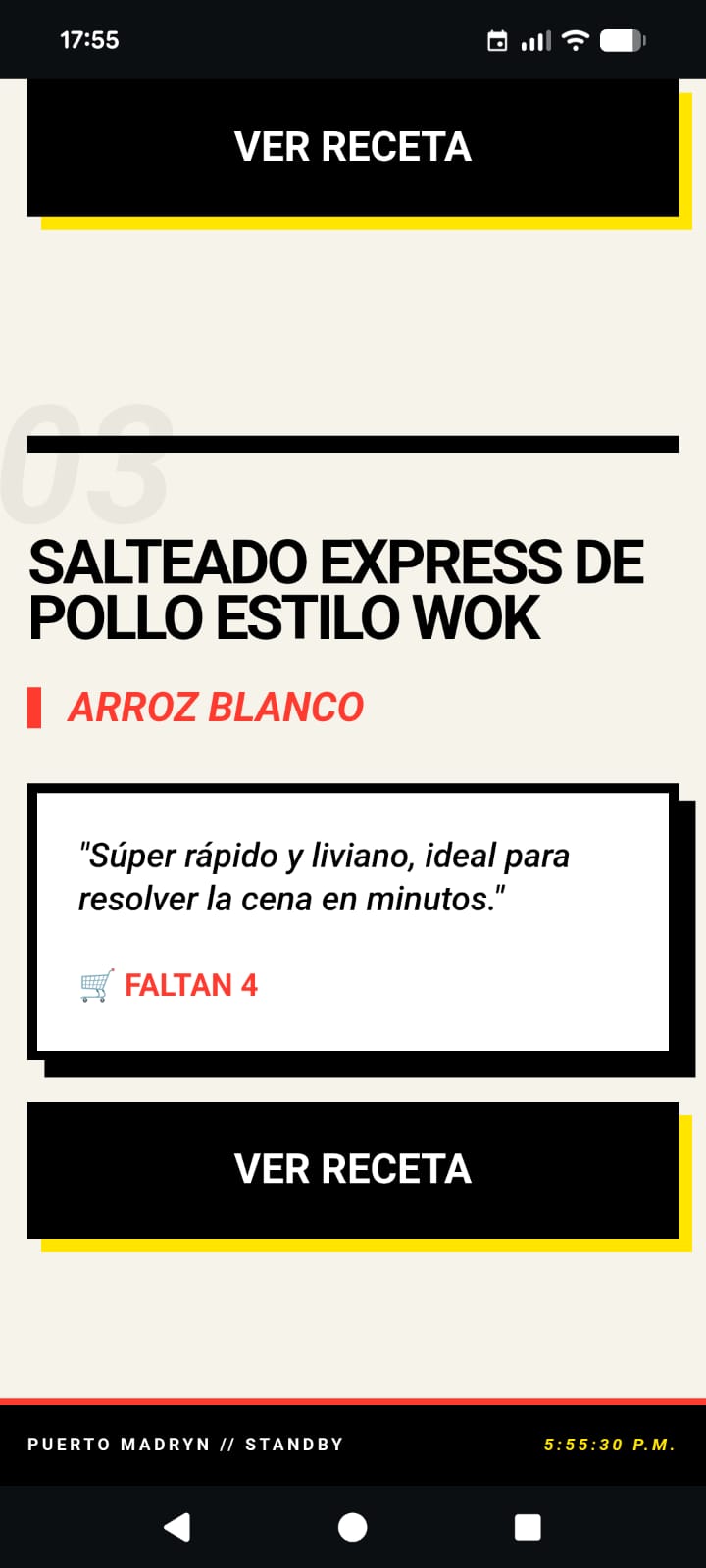
Users enter what they have and receive three recipe suggestions generated by artificial intelligence. Each option includes a title, description, suggested garnish, missing ingredients, estimated preparation time, detailed ingredients, and step-by-step instructions.
The problem
Decision fatigue in the kitchen
Cooking at home often becomes difficult before preparation even begins:
- No inspiration from available ingredientsPeople have food at home but struggle to connect those ingredients into a complete meal.
- Recipes assume missing ingredientsMany platforms suggest dishes without making it clear what needs to be purchased.
- Too many options and too much frictionSearching through recipe websites can take longer than cooking.
- Generic experiencesMost cooking interfaces feel neutral and interchangeable, without a distinct voice.
The solution
A direct conversation with an AI cook
I designed and developed an assistant that turns a simple ingredient list into three realistic recipe options.
The interface uses a strong editorial visual language inspired by posters, brutalist layouts, and Argentine humor. Large typography, high-contrast colors, sharp borders, and direct language make the product feel immediate and recognizable.
Key features
- Ingredient-based generationUsers receive three personalized recipes based on what they already have.
- Multiple cooking modesThe experience supports normal, healthy, fancy, international, and unusual directions.
- Missing ingredient detectionEach recipe clearly indicates whether anything else needs to be purchased.
- Complete recipe detailsA modal reveals ingredients, preparation steps, and a shopping list.
- Rioplatense AI personalityGenerated content uses concise Spanish with a local tone adapted to Puerto Madryn and Argentina.
- Fast, focused interactionThe workflow is reduced to one input, one action, and a clear set of results.
- Loading and error statesThe interface communicates progress and clearly explains configuration or API errors.
Engineering
Technical highlights
The React-to-AI bridge
The frontend sends the available ingredients and selected mode to a serverless endpoint through a POST request. The server function securely initializes Gemini, builds the cooking prompt, and returns the recipes without exposing the API key in the browser.
Structured recipe generation
Gemini receives a strict schema for titles, garnish, description, available and missing ingredients, preparation times, detailed ingredients, steps, and a shopping list. This keeps the data predictable and makes every recipe render consistently.
const response = await fetch('/api/recipes', {
  method: 'POST',
  headers: { 'Content-Type': 'application/json' },
  body: JSON.stringify({ ingredients, mode: newMode }),
});
{
options: [{
title: "...",
available: [],
missing: [],
time: "...",
recipe: { detailed_ingredients: [], steps: [], shopping_list: [] }
}]
}The serverless architecture keeps the Gemini credential inside recipes.js and environment variables. The application is ready for deployment on Vercel and can be developed locally with Vite and Vercel tooling.
Result
Impact
Qué mierda cocino turns an everyday moment of indecision into a fast, playful, and useful cooking experience. Instead of searching for the perfect recipe, users start with reality: the ingredients they already have.
The strong visual identity also gives the product a memorable personality, making a functional AI tool feel like a recognizable digital brand.